Book Online You can request appointmentin 24 hours
Email : info@neurosurgery.com.pk
Phone : (042) 111 171 819
Best Spinal Dysraphism Surgeon in Lahore Pakistan
Neurosurgery > Best Spinal Dysraphism Surgeon in Lahore Pakistan
Spinal Dysraphism
Spinal dysraphism is an umbrella term that describes a number of conditions present at birth that affect the spine,spinal cord or nerve roots.
All forms of spinal dysraphim result from an event early in an embryos development. In about third week of development,a sheet of cells called neural plate folds to form a structure called neural tube.The top of tube develops into brain and rest of neural tube develops into spine and spinal cord.spinal dysraphism will occur when a section of neural tube that will become spine and spinal cord does not close completely.
Myelomeningocele: A condition in which spinal cord and its membranes are not contained within spinal column but protrudes into a sac outside the body.
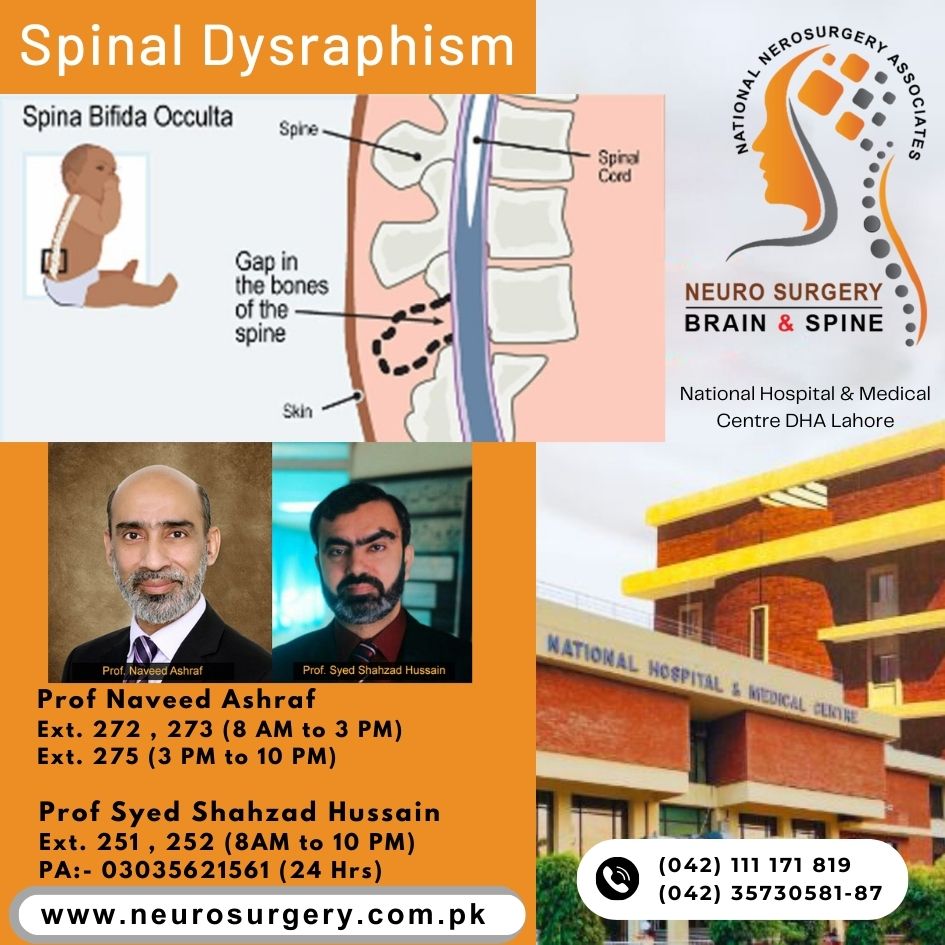
•Spina bifida Occulta A condition in which one or more vertebrae have slight defect but spinal cord and its membranes are not affected
Diastematomyelia:complex type of dysraphism in which spinal cord splits lengthwise into two cords
Dermal sinus tract: a channel in the skin that may reach all the way to spinal cord..Dermal sinus tracts are often associated with tumours around the spinal cord called dermoid or epidermoids
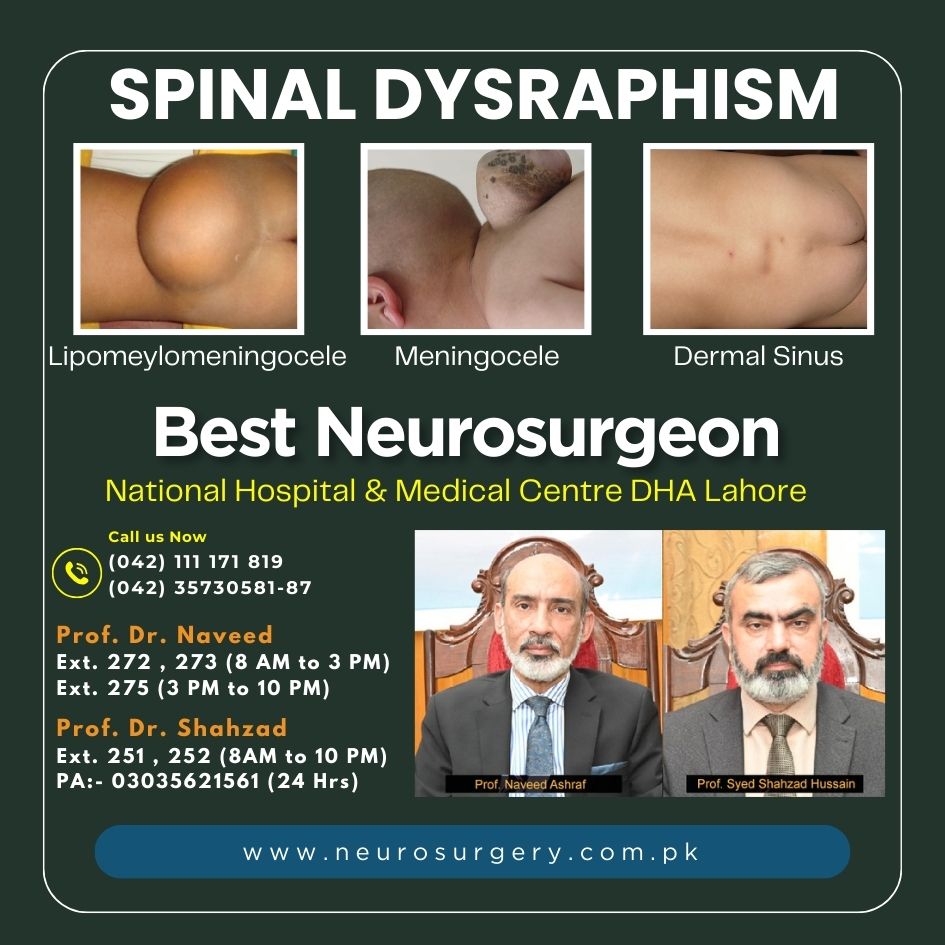
Lipomyelomeningocele:
Condition in which abnormal growth of fat attaches to spinal cord, its membranes and space outside spinal canal
SYMPTOMS Symptoms may vary by type •spina bifida occulta rarely causes symptoms and if it becomes symptomatic then may does require treatment usually in the form of de tethering of filum terminale. •Myelomeningocele causes incontinence,hydrocephalus,sensory loss ,leg weakness and paralysis.If it becomes symptomatic then may require treatment. •Diastematomyelia:may cause structural scoliosis and tethered cord. •lipomyelomeningocele Causes back swelling, leg pains, weakness in legs, foot deformities. •dermal sinus tract:often causes no symptoms..however these can cause tethered cord and act as a pathway for infection(recurrent meningitis)
•Tethered Cord: Symptoms vary but often include leg weakness,sensory loss,low back and leg pain.bladder or bowel incontinence, foot deformity or change in normal curvature of spine.
Treatment Surgery Surgical treatment varies by type •In Myelomeningocele,defect that exposes the spinal cord to outside world is repaired in first day of life,normal structure is restored as much as possible.operation cannot reverse the damage that has already occurred
•spina bifida occulta does not require surgery if it causes no symptoms
•Diastematomyelia..most common surgery is decompression which involves removing thin piece of bone /cartilage that divides the spinal cord.
Lipomyelomeningocele is treated by freeing the spinal cord from its attachment to lipoma removing as much of lipoma as possible
The goal of surgery in dermal sinus tract is to remove the tract,untether the cord and to prevent any loss of neurological function.Tract must be removed
Surgery for tethered cord is tailored to cause of tether..spinal cord is opened from behind via laminectomy and constriction is removed.