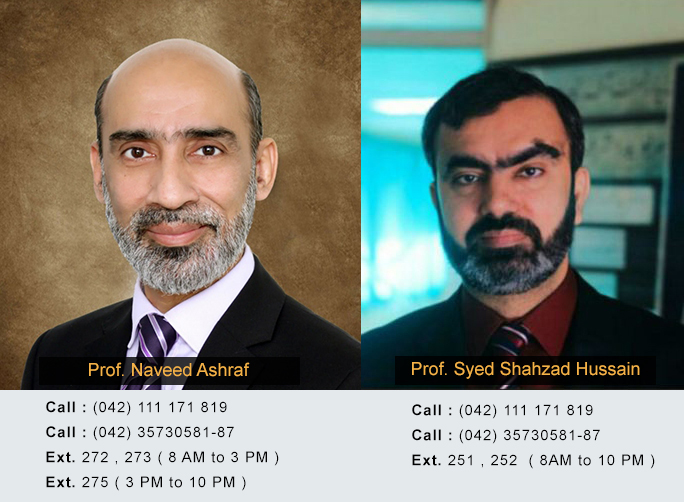
Professor Naveed Ashraf
Naveed Ashraf is regarded as one of the pioneers of modern neurosurgery in Pakistan and is credited nationally for his contributions to the development and growth of the speciality. He is currently a Professor of Neurosurgery at the National Hospital & Medical Centre, Lahore, where he established the Department of Neurosurgery, which is one of the leading departments in the private sector nationally. He was the Professor of Neurosurgery at the Punjab Institute of Neurosciences, Sheikh Zayd Medical College Rahim Yaar Khan, and Allama Iqbal Medical College/Jinnah Hospital Lahore.
Dr Ashraf led these and under his aegis, these centres became nationally recognised successful centres for comprehensive neurosurgical services.
Dr Ashraf is the Associate Editor in Chief for Trauma of Surgical Neurology International- a leading journal of neurosurgery. He was formally the Chairperson of the specialist advisory committee in Neurosurgery at the University of Health Sciences, Lahore Throughout his career, he has educated a large number of the Pakistani neurosurgical workforce, many of whom assumed leadership positions in the public and private sectors.
He has been a practising neurosurgeon for over 30 years and has subspecialty expertise in cerebrovascular and trauma neurosurgery. He had performed the country’s first extra-intra cranial bypass surgery in 1995 and his department receive referrals both nationally and from abroad for complex aneurysms, arterio-venous malformations, Moya-Moya disease, and carotid endarterectomies. He developed a closed-model neurocritical care unit, the first of its kind, where neurosurgeons are trained in all aspects of invasive ventilation and bronchoscopies for TBI patients.
The neurosurgery department at Jinnah Hospital Lahore, which he established, provides state-of-the-art neurosurgical care, free of cost and is at the forefront of neurosurgical service. It is one of the few departments in Asia performing intraoperative CT-guided neurosurgery, Brain Microdialysis, regular ICP and brain parenchymal tissue and oxygen monitoring in regular clinical practice.
Additional expertise is offered in all general paediatric neurosurgery with a high volume of experience in spina-bifida/spinal-dysraphism, craniosynostosis, and Chiari malformation, as well as adolescent craniofacial reconstruction for traumatic, iatrogenic, and congenital skull defects. For this, there is a strong partnership with plastic surgery colleagues who are leaders for such work in Pakistan. He also has one of the largest practices of trigeminal neuralgia in the country, being a high-volume surgeon for microvascular decompression, as well as radio-frequency thermal rhizotomy.
Professor Dr. Syed Shahzad Hussain Shah
Professor Dr. Syed Shahzad Hussain Shah is a consultant Neurosurgeon and Spine Surgeon with over twenty years of high-volume experience, currently Heading one of the Neurosurgery Units at Lahore General Hospital / Punjab Institute of Neurosciences and consulting privately at National Hospital, Defence & Doctors Hospital, Lahore. Trained and tempered in some of the country’s busiest centres—including Lahore General Hospital and Jinnah Hospital, Lahore—he brings a calm, outcomes-focused approach to complex brain and spine disease. Patients choose Professor Syed Shahzad Hussain Shah for clear, compassionate decision-making, timely second opinions, and meticulous surgical planning that aligns the safest technique with each patient’s goals.
His clinical practice spans the full spectrum of modern neurosurgery: paediatric neurosurgery, neuro-oncology (including skull-base and malignant gliomas), comprehensive cerebrovascular surgery (aneurysms, AVMs, bypass) with hybrid open–endovascular strategies, advanced spine surgery (degenerative, deformity, trauma, tumours), and functional/pain procedures. He has particular mastery in minimally invasive and endoscopic techniques—especially endoscopic endonasal pituitary surgery, endoscopic ceanial and spine surgery and precision vascular microsurgery. Professor Shah’s operative workflows integrate neuronavigation, intraoperative neurophysiological monitoring, DTI-guided tractography, endoscopy, and fluorescence/ICG angiography to maximise resection or repair while protecting eloquent brain and spinal pathways.
From first consultation to recovery, Professor Syed Shahzad Hussain Shah practices a tightly coordinated, evidence-based pathway: pre-habilitation and risk optimisation; conservative options when appropriate; definitive surgery when indicated; and enhanced-recovery protocols to reduce pain, blood loss, and hospital stay. Multidisciplinary tumour boards, spine–pain conferences, and hybrid-OR access ensure that each patient receives the most effective, least disruptive treatment available. With an active mentorship programme and a strong academic footprint, he translates new knowledge into everyday care—so patients benefit from techniques that are both cutting-edge and time-tested. To discuss a diagnosis or explore minimally invasive options, please book a consultation with Professor Dr. Syed Shahzad Hussain Shah’s clinic team.